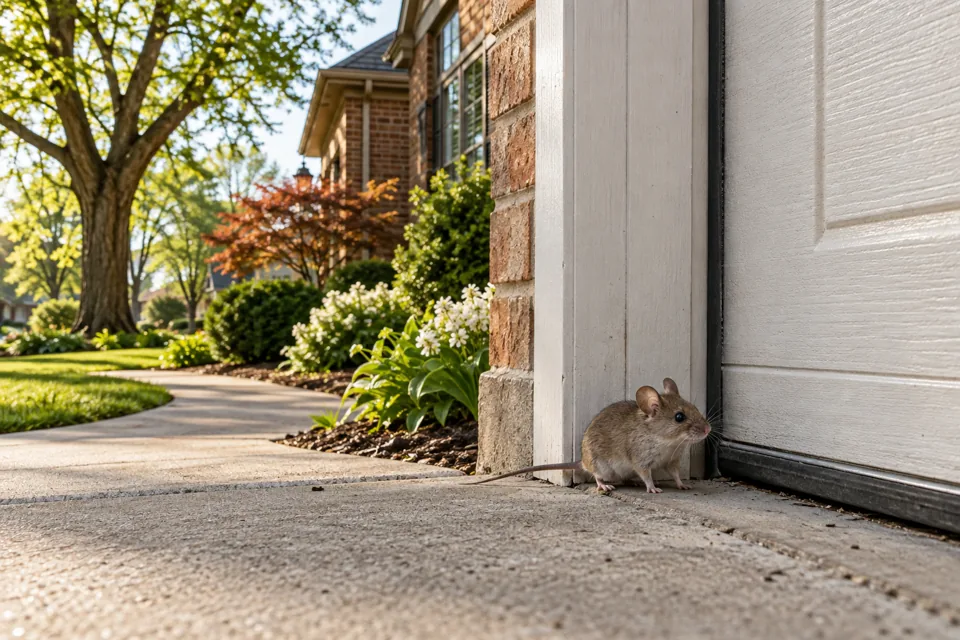
First comes finding out how the rodents get in; next, the ones inside are removed with traps or other approved methods; last, the home is sealed so they cannot come back. Because roof rats, Norway rats, house mice and, in some areas, pack rats all travel and nest in their own way, the plan follows the species. Describe the noises, droppings or damage you found through Call Now and an independent provider serving the Madison area will respond.
Rodents in Madison: species and what each one does
| Rodent | Where it nests | How it gets in | Typical sign |
|---|---|---|---|
| Deer mouse and pack rat | Garages, sheds, stored boxes, vehicle engine bays | Gaps at garage doors and wall edges | Nests of sticks, cholla or trash, chewed wiring |
| Roof rat | Attics, rooflines, palms, dense shrubs | Climbs trees, fences and wires, then enters vents, soffits and roof tiles | Noises overhead at night, spindle-shaped droppings, rub marks along beams |
| Norway rat | Burrows by foundations, basements, crawl spaces | Digs along slabs and enters through low gaps, drains and pipe chases | Burrows, greasy runways and blunt droppings at ground level |
| House mouse | Walls, insulation, pantries and appliances | Squeezes through gaps near a quarter inch | Small droppings, shredded nesting, scratching in walls |
What the noises in the attic tell you
Rats are heavier, so scampering overhead after dusk often points to roof rats. Mice make lighter scratching and squeaking. Daytime noise can mean a large population or a different animal such as a squirrel. A provider identifies the species from droppings, rub marks and entry points rather than from the sound alone.
Rodent control methods compared
| Method | How it works | Notes |
|---|---|---|
| Live traps and one-way doors | Capture or exit devices for specific cases | Local rules decide whether a rodent can be released. |
| Tamper-resistant bait stations | Locked stations outdoors holding rodenticide | Used outdoors and where regulation allows. |
| Exclusion | Gaps sealed with hardware cloth, steel wool, copper mesh, sheet metal and sealant | Stops reentry and is the long-term fix. |
| Sanitation and cleanup | Removing droppings, nesting and contaminated insulation | Reduces odor and prevents attraction. |
| Snap traps | Mechanical traps placed on travel lines | Immediate results with no poison in the structure. |
How rodents get in
A gap of roughly half an inch lets a rat through, and about a quarter inch is enough for a mouse. The usual ways in include roof returns, unscreened attic and gable vents, openings around pipes and wires, worn garage door seals, dryer vents, damaged soffits, foundation cracks and gaps at the chimney.
A tree branch or power line is often the way a roof rat reaches the roof, so pruning limbs to stand a few feet clear of the roof and walls closes off a popular highway.
Signs of rodents in a house
- Droppings along walls, in cabinets and in the attic
- Pet reactions to sounds, and an ammonia-like or musty odor
- Gnaw marks on wood, wires, pipes and food packaging
- Nests of shredded paper, insulation or plant material
- Scratching, scurrying or gnawing in walls, ceilings and attics, usually at night
- Greasy rub marks along baseboards and rafters
Questions to ask a rodent control provider
- Do you show me photos of what you found and what you sealed?
- Is cleanup of droppings and insulation part of the scope or separate?
- Which rodent do you think I have and what evidence points to it?
- How many visits are planned and what happens if activity continues?
- Where did they get in, and which entry points will you seal?
How rodent control works from inspection to follow-up
Doing rodent work in the right order is what makes it succeed. If you trap but do not seal, new animals simply take the place of the ones removed, and if you seal but do not trap, a rodent can be shut inside the walls. A well-run visit follows the proper sequence.
- Inspection of the roofline, attic, soffits, vents, foundation, garage, crawl space and utility entries, looking for gnaw marks, rub marks, droppings, nests and runways.
- Identification of the species, because roof rats, Norway rats and house mice travel, nest and take bait differently.
- Trapping or baiting plan: snap traps placed on the travel lines, with tamper-resistant stations outside where rules allow.
- Exclusion: gaps larger than a quarter inch sealed with hardware cloth, steel wool, copper mesh, sheet metal or sealant, and vents and weep holes screened.
- Cleanup and repair recommendations for droppings, contaminated insulation and chewed wiring.
- Follow-up visits to remove traps, check the seals and confirm activity has stopped.
What makes rodent control different in Madison
Madison sits on an isthmus between Lake Mendota and Lake Monona, so water, marsh edges and shoreline vegetation shape the mosquito and insect season. The University of Wisconsin campus and the large rental market mean frequent turnover, which raises the risk of bed bugs and cockroach spread in multi-unit buildings.
Cold winters push mice and overwintering insects into homes, garages and attics from fall. Older neighborhoods have mature trees and wood features that suit carpenter ants when moisture is present. These local conditions can shift the places rodents nest, run and enter, so ask the provider what that means for your property.
Rodent control across Madison and nearby cities
Madison, Wisconsin fall within the area of Pest Control in Madison: . Requests may also go to providers who serve Middleton, Fitchburg, Sun Prairie, Verona and Monona. Coverage depends on the address, so state your ZIP code on the call.
Start with Call Now at the top of the page and say what you found, whether noises, droppings or damage. That puts you through to an independent provider, who verifies your address, goes over the roofline and attic and provides the scope in writing.
Related help in Madison
If this is not quite your situation, these pages cover the neighboring questions: Termite inspection and control; Ant control; Comparing pest control quotes; Cockroach control. The service area list shows every nearby city and ZIP code covered.